A Song Of Stone

I

The ‘fizz’ and ‘clink!’ of the Solent’s waves gently tickle the storm-smoothed stones of Chesil tombolo. This percussive rhythm is laced with the sounds of a choir singing, swelling up from nearby Quiddles Café. I listen to this duet composed of voice and tide, a soundscape that ebbs and flows. 

The soloist soprano waivers above the haunting ‘ooo-wooo-ooo’ of the altos before the song breaks like a wave cascading into the depths an octave below. 

Overhead, seagulls launch their cries into the partially sun-less sky. From this drone’s eye view, Dorset’s little Isle dangles from the sweeping coastline like a tiny earring or pendant charm. Meanwhile, the wind – whipped by salty dregs of spray – sends hats whirling, raincoats flapping and long hair slapping. A Summer’s day on Portland. 

‘Written In Stone . . . Our Island Song.  . .’ the choir voices proclaim, now in unison. This melodic transition harmonises with the shifting stones cackling along the tide. A melodic transition to the wind’s lonesome howl.

Performed by Island Voices, Chiswell’s celebrated community choir, this impromptu recital is the perfect prelude for viewing John Maine’s ‘Chiswell Earthworks’. With the tune of a raucous sea-shanty lilting through the soft patter of raindrops, I stride up West Weares slope to study Maine’s monumental work of art in more detail. 

II

Five dry stone walls rise up from the ground, running parallel to the tideline several hundred meters below. Facing outwards and towards the choppy whitecaps of the sea,  the ‘Chiswell Earthworks’ span roughly an acre at the far end of Chesil Beach and hold back the sloping, slipping land of West Weares.  

Like lines etched into the verdant landscape, these hand-built trails follow the topography of the land, its riffs and gullies. The longest wall is 55 yards long and each one acts as a retainer, a structural component protecting against erosion and weathering.

Bending. Curving. Twisting. The walls’ gentle undulations stalk the slope like slithering snakes of stone. Droplets of rain mix with sea spray, glistening slivers of silver on their grey flanks. The walls seem to breathe, to move, to dance along to the Island’s Song.

Maine’s sculptural forms not only echo the curvaceous rise and retreat of the Solent’s steely hue, but the agricultural technique of terracing slopes to grow crops. The artist alludes to paddy field platforms, to climbing olive groves and even layered cliff-top gardens, almost offering an exotic appeal to this pocket of northern-hemisphere shingle. 

The varying heights and staggered intervals of the ‘Earthworks’ also recall Dorset’s ancient strip lynchets, a stepped field system once commonplace in this area over 4,000 years ago. 

Each terrace is made from Portland Limestone extracted from the nearby quarries. Although several of the quarries have been retired and lately revitalised as nature reserves and educational resources, the heft of stone which make up the ‘Earthworks’ gives an indication as to the scale of the mining industry on the Isle of Portland.

Forming a sort of visual timeline spreading out across the cliff, each wall is made from a different layer of geological rock strata. The primary wall of Slat represents the topmost layer of Portland Limestone; the second wall is made from Topstone and the third wall is of Roach. Whitbed, which has a slightly lower content of shell, has been utilised for the fourth wall and the fifth and lowermost wall is made of Basebed, the deepest type of Portland Limestone mined in the quarries.

Installation of the ‘Earthworks’ began 1987, however difficulty securing workers for the project meant that members of the local community came forward – volunteers, students and even prisoners – to help lay each stone, one by one. Although many doubted that the ‘Chiswell Earthworks’ would ever be completed, the last stone was finally laid in 1994.

The first terraced wall of Slat

III

Maine’s Earthworks are not just an artistic commission in stone. They are the very flesh and blood of the landscape. Excavated. Disembowelled. Shaped and reorganised by human hands. The innards of the Island laid out in organised lines, as though organs or intestines ready for inspection. A quarry dismantled and deconstructed. History is unravelled to form a visual time-scape we can climb, sit and walk on.

Revealing an embodiment of place, the artist has put a magnifying glass up to ‘slow time’, like peeling back the layers of an onion – the skin of the Earth’s crust. The accumulation of sediment and ooliths across millions of years is dissected and distilled. We are presented with a pictorial narrative of prehistoric geological processes in recognisable, structural forms. 

Carrying the bulk of the centuries and the roughness of the elements, the ‘Chiswell Earthwork’ stones evoke thoughts of permanence and impermanence. A poetic otherness which although physically tangible, is almost incomprehensible relative to human lifespan. 

Celebrating locality, identity and the passage of time, the artist transforms a beachside cliff into a scene that could be set in Christopher Nolan’s ‘Odyssey’, or paralleled by the lonely remains of Shelly’s ‘Ozymandias’.

IV

As I stride up the slope from Quiddles Café, my heart beating a little faster, I choose a path heading to the right, where the wildflowers have been disturbed. A human sheep trail. Dodging brambles and the occasional stinging nettle, I come close to one of the mid-walls. The sculpture changes perspective, the walls concertina into each other as the uppermost terraces suddenly disappear.

A dog bounds in front of me before being called to heel by its owner. My chosen trail continues, winding its way to loop back at undulation in the wall. Long grasses shake their golden heads, Morning Glories carpet the blocks of stone enthusiastically; poaceae seem to bury the ‘Earthworks’ so they take on the personality of a great fortress or ancient burial complex from a bygone age. Whispers of ancient civilisations – from Hadrian’s wall at the opposite end of the country, to the Great Wall of China – find their voice within this assembly of Portland stone.

Beach huts emerge from the mist

I continue heading lengthways, towards the far end of this ‘Earthwork’. The immense block-like forms echo the 1920s oblong beach huts emerging from the Island’s mist-cloaked viewing point. A large piece of stone at the end of the wall forms a sort of stepped ‘seat’. A ‘look out’ – a natural armchair from which to survey the sea and sky.  Wild grasses, heads heavy with seed pods, jitter in the breeze. A butterfly briefly settles on the ledge as though to bask in the sun breaking through the clouds.

This modern-day Mayan-like structure honours the sea wall built to protect the village of Fortuneswell from tidal flooding. Margaret Somerville, a local Gallerist, came up with the idea of a large-scale artwork to commemorate the completion of the sea defences and promenade as a way to reinforce the identity and sense of place on Portland.

The sea defences at the far end of Chesil Beach

The Earthworks were commissioned by the environmental arts organisation Common Ground as Part of their New Milestones project. This initiative invited communities to embrace landscapes of the everyday, to appreciate the scenery on their doorstep and to care for the environment of their local surroundings through permanent, and often large scale, art interventions. From its inception, the commission involved the local community to ensure their support and interest. Margaret Somerville offered a sculptor’s residency and John Maine emerged as a firm favourite for the project owing to his strong ties to the quarries on Portland.

V

From the reinforcements along the US – Mexico border; the boundaries dividing Gaza, the West Bank; neighbourhoods in Belfast; to those in Cyprus and the frontier fence splitting India and Bangladesh, John Maine’s ‘Chiswell Earthworks’ could be considered a premonition for the current border and barrier concerns of this decade. The recent proliferation of walls across the globe as statements of authority and hostility have been built and reinforced at great human, financial and ecological cost.  

Yet here, on the Isle of Portland, walls of stone instead become their own place. A place where people come together, where fauna and flora thrive. John Maine has provided habitats for animals and a lasting solution to the landslides and erosion at West Weares through engaging people and place.

Even the use of Portland Limestone – which we are typically accustomed to seeing in its gleaming white form – the tiny indentations of ooliths occasionally interrupting the  smooth and regal-looking surface of the streamlined Cenotaph, the magnificence of St Paul’s Cathedral and the UN Headquarters. Associated with refinement it is perhaps at first a little daunting to see Portland stone . . . at home. Its rugged, unpolished appeal more akin to the weathered skin of a Medieval drystone wall.

But it is this unexpected element which perhaps makes the ‘Chiswell Earthworks’ so memorable – so familiar to this land and yet also so striking, considering it is birthed from beneath our very feet! 

Celebrating the generations of quarrymen and masons, the craftsmanship and heritage of the Isle of Portland – along with its connection to stone and the sea – the artwork itself becomes part of the fabric of the environment and the community. The upper terrace, between the first mosaic-like wall of Slat and the second wall of larger Topstone pieces has been clipped and manicured to provide an easily accessible area for social and community gatherings. Friends and families can enjoy picnics, children play and sun-seekers can appreciate the light as wave-watchers take in the views.

A landscape of the everyday has been transformed by John Maine’s ‘Chiswell Earthworks’. A song in five parts which resonates through the ages – beside the sea, beneath the sky – of, and amongst, the stones.

KEEP CONNECTED & INSPIRED

Join Our Pendour Pals!

PENDOUR PICKS

Villa Rucellai, Italy

WANDERLUST

Linda Bell

It Was Only The Moon : Elenor Martinsen, Solo Exhibition ‘New Patterns’

‘With freedom, books, flowers and the moon, who could not be happy.’

Oscar Wilde

‘I wish for the moon…for the world to be a peaceful place for all.’

Elenor Martinsen, May 2026

A photograph of Elenor Martinsen's painting Over the Moon
Over The Moon, Mixed Media on Canvas, 40 x 40 cm

‘It Was Only The Moon’ accompanied Elenor Martinsen’s solo exhibition ‘New Patterns’ presented by Gallery White Box, Blackheath, London.

IT WAS ONLY THE MOON

Elenor Martinsen’s first solo exhibition in London is a tonic for troubled times. The artworks have a balanced, melodic feel – like painterly lullabies to soothe the soul. Drawing inspiration from her Nordic roots and international travels, Elenor imbues her work with the gentle and nurturing influence of the Moon.

The use of silk fibre in ‘Moon Longing’ and ‘Over The Moon’ add a physical dimension to her technique. Acrylic paint settles on the fibres suggesting a soft yet timeless appeal. Whilst silk – and at that, silk worms – have been used by artists to allude to the night and to sleep, the link here is dominant. We consider the patterns of the Moon, its cycle of crescent shapes and segments, its ability to vanish and then ride in front of the Sun, obscuring the light of day as witnessed during the recent eclipse.  Elenor’s moons are full, perfect discs of wonder, generous circles of nocturne luminescence beaming above slants of bare linen angled as though rooftops or mountain slopes. The realm of the heavenly seems within our earthly reach.

A photograph of Elenor Martinsen's painting Moon longing
Moon Longing, Mixed Media on Canvas, 40 x 40 cm

A mysterious narrative is suggested in the three pastel-blue canvases of ‘Connecting’.  A landscape seems to thread its way across the tryptic, as though a pattern of paint. Likewise, in ‘Go With The Flow’ we see simplified hills and rocks, evocative of the artist’s native Norway, stretching across a pink horizon line – though captured here on a scale and with a sensitivity that exudes a feeling of preciousness. An avid wild swimmer and walker, Elenor welcomes us to a secret place of her own making.

Sensitive profiles of the land are rendered with crisp straight lines, influenced by Agnes Martin’s sense of stillness. This certainly follows on in the larger painting ‘Peace and Hope.’ Precise horizontal lines are joined by light washes of grey punctuated by subtle nuances and vertical flashes of white, like partially submerged navigation markers. The landscape’s flowing forms sit like islands jutting up out of calm waters, embracing the sky as they kiss the water’s edge.

These sleeping forms and shapes of restraint seem tucked up for slumber.

Are these shorelines sleeping in the stillness? 

Do landscapes dream?

Peace & Hope, Mixed Media on Canvas, 80 x 120 cm

The golden moon at the heart of ‘Hope’ silently shimmers between two peaks, like the tiny stars just visible betwixt the snowy altitudes of Harald Sohlberg’s ‘Winter Night In The Mountain’ – a jewel of Norway’s National Museum, exhibited several years ago in Dulwich. In Elenor’s painting the Moon takes on a similar magnetic presence. It seems to have settled in its central position, a guardian watching over the blue-swathed mountaintops.

In each work, the Moon itself becomes part of the landscape. Devoid of human interference in their abstract nature, these landscapes seem almost lonely. Yet this produces a purity echoing the presence of the Moon itself.

A photograph of Elenor Martinsen's painting Hope, Mixed Media on Canvas, 80 x 120cm
Hope, Mixed Media on Canvas, 80 x 120cm

In ‘The Way Home, New Patterns’ the Moon has become blue, as if to signify an exceptionally rare occasion – once in a Blue Moon – or an anomaly in a pattern. This hovering sphere of swirling topaz glimmers like glass salvaged from the sea, or perhaps a beautiful gemstone – the famous Hope Diamond necklace, here adorning the horizon’s neck. This crystalline sphere becomes our planet – the blue planet, nestled in the peaceful galaxy of Elenor’s calm palette and gentle brush. Painted by the artist soon after a trip to Brazil, flying across the open expanse of the Atlantic Ocean, the title may recall Elenor’s own feelings of returning home.  

The delicate ‘Y’ shapes in the work signify new growth and prosperity. A symbolic reference perhaps to the time the artist spent in the north of Norway accompanying the Sami people charting reindeer tracks, or even a reference to the embroidered threads of the mothers of Russian soldiers, silenced against their will. ‘The Way Home’ may therefore be a work dedicated to those uprooted by war, climate change and natural disaster.  

A photograph of Elenor Martinsen's painting New Patterns
New Patterns, Mixed Media On Canvas, 60 x 80cm

In these works of deceptive simplicity Elenor herself has reached for the Moon. For its comforting presence and wizened illumination through the darkness of illness and despair. Elenor invites us to adopt new ways of looking, new ways of thinking. She encourages us to develop ‘New Patterns’ as a new form of living. Living softly – like the Moon’s quiet luminescence – to navigate the uncertain and the unknown with peace.

ELENOR MARTINSEN

A photograph of Elenor Martinsen

Elenor Martinsen is a Norwegian visual artist and gallerist. She began painting in the eighties and had her first solo show in Barcelona in 1992. She later established a gallery in Oslo and an art centre on the shore of Lake Tyrifjorden. 

Martinsen’s works have been acquired by major institutions and private collections in many countries. She continues to work with collages of wax, photography, rice paper, gold leaf, pigment and pastel. 

Visit Elenor’s website here.

GALLERY WHITE BOX

Situated opposite the Hare and Billet Pond on the southwest corner of Blackheath, London, artist and curator Aleksandra Niemczyk presents contemporary and sometimes unconventional voices at Gallery White Box.  Through group and solo shows, artist residencies, pop up installations, open studio events, art workshops and more, Gallery White Box’s vibrant programme supports both local and international artists. 

The Gallery offers advisory to both new and existing art collections for private and corporate residencies.

Discover more here. 

Elenor Martinsen : ‘New Patterns’

Presented by Gallery White Box, Hare & Billet Road, Blackheath, Greenwich, London.

Exhibition Dates : 25th September – 4th October 2026.

KEEP CONNECTED & INSPIRED

You can now subscribe to Pendour PULSE – our quarterly journal.

Aligned to the Equinoxes and Summer and Winter Solstices, PULSE features our latest Places, Picks and Pauses. 

Join our Pendour Pals – sign up below, click subscribe and look out for your Welcome email to keep up to date with all things Pendour! 

Join Our Pendour Pals!

FOLLOW THE ALLURE OF PENDOUR

PENDOUR PICKS

katy Brown : ‘Enchanted’

PENDOUR CULTURE

Linda Bell

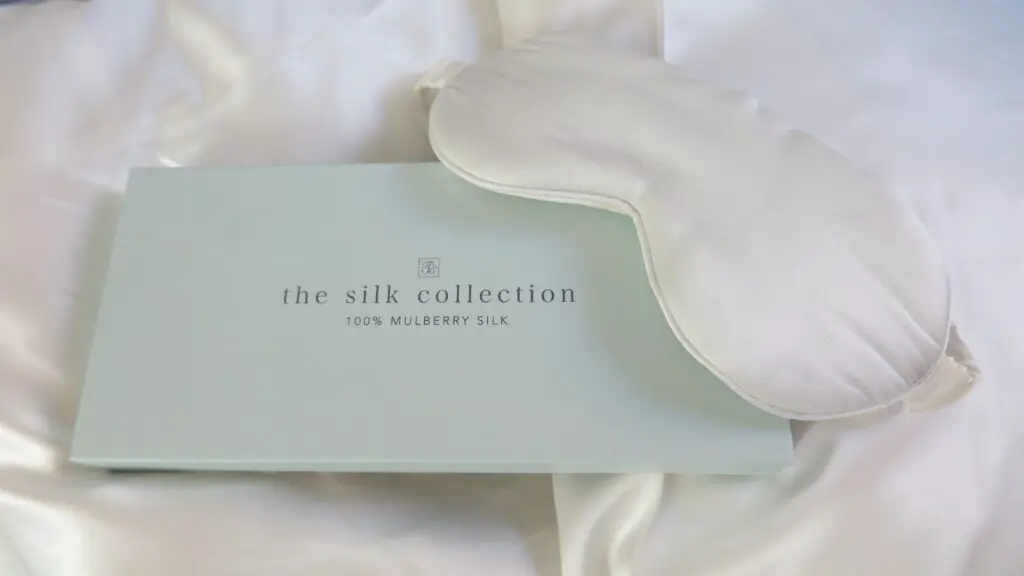
An image of the Silk Collection mask and presentation box laid on a Silk Collection pillowcase

Zamas Hotel Review : Where to Stay in Tulum, Mexico

WANDERLUST
 

PENDOUR PERFECTION * * * * *

Linda Bell

Pendour Pairing

In this Pairing

we bring together 

Alteya Organic’s

Bulgarian Rose Water 

and Zurbarán’s 

‘still life of A Cup of Water

and a Rose’.

Although separated by centuries, both celebrate the enduring beauty of the rose; Alteya through scent and daily ritual; Zurbarán through paint and contemplation.

Together they invite us to pause and appreciate the quiet beauty often found in the simplest things.

A single rose next to a cup of water.

Thousands of rose petals

plucked, distilled and bottled.

A moment preserved, a scent captured.

United by the timeless symbolism of the rose, this Pendour Pairing invites us to find significance, transformation and contemplation in simplicity.

Summer Solstice Salutations

A summer solstice themed graphic

As the sun breaks through the darkness

in the early hours of this year’s Summer Solstice,

we greet the longest day

with gratitude and respect

for the rhythm of the Seasons. 


May we find joy, 

energy and abundance as the

warmth of the summer sun

brushes our lives with radiant light and

the rapturous colours of nature’s fullness. 

A photograph of Helen Leaver's painting Romantic Reverie
Helen Leaver, Romantic Reverie, Oil on linen, 71 x 71 cm

Garlands of pink perform a spirited dance upon a veiled backdrop of luminous blue in Helen Leaver’s ‘Romantic Reverie’. 

Calling to mind meadows awash with flowers basking in the midsummer sun, this pastel drenched day-dream is a lyrical meditation. A lilting breath, a thought arising, hovering across a momentary pause in the sun’s journey through the skies. 

A photographic Detail of Romantic Reverie, Oil on linen canvas, 71 x 71 cm

Delicate twirls and folds of paint allude to the fullness of nature’s bounty. Drips, specks and brush marks of rich pigment complete this immersive embrace – an offering to the vibrant Solstice light and the harvest yet to come. 

WISHING A HAPPY SUMMER SOLSTICE

TO ALL OUR PENDOUR PALS ! 

Find out how nature inspires Helen Leaver’s paintings in our first Pendour ‘Conversation Piece’ :

A Conversation Piece With Helen Leaver

PENDOUR CULTURE

Linda Bell

KEEP CONNECTED & INSPIRED

PENDOUR PICKS

katy Brown : ‘Enchanted’

Solo exhibition at the Russell Gallery, Putney, London

Linda Bell

Wintertide Wishes

Linda Bell 

Museum Moment : Zurbarán at The National Gallery

A single thornless rose with pink-white petals balances on the edge of a silver platter. Beside it sits a white cup of water, the curves of its two handles echoing the petals’ forms. Painted by Francisco de Zurbarán (1598 – 1664) around 1630, the scene is almost perfectly still –  save for beads of moisture gathering around the base of the cup.  

As though arranged upon an altar, or plain wooden table, light glances off the silver platter and the cup’s smooth surface, drawing our attention to their contrasting textures and quiet presence.

The rose seems fragrant and freshly plucked, its voluptuous petals intensified by the sombre shadows in the depths of the room. Rather than an encroaching darkness we observe a velvety dusk akin to the night sky, possibly the suggestion of a shuttered bedchamber ready for afternoon siesta. It’s like we can breathe in the rose’s soft perfume, permeating though the canvas and varnish, past the deep, aged wood of the painting’s frame.

A photograph of Zurbaran's painting Still Life of a Cup of Water and a Rose

The thornless rose was a well-known symbol of the Virgin Mary in seventeenth century Spain. Yet this deceptively simple painting may contain other layers of meaning.  

The pairing of rose and water may allude to rose water, for centuries prized throughout the Mediterranean and Middle East for medicinal, culinary and ceremonial uses. Introduced to Spain through Islamic culture and first cultivated in the lush gardens of the Alhambra, the rose became woven into Spanish life, poetry and devotion. Indeed, ‘El Dia de la Rosa’ is still celebrated in Catalonia each year.

Viewed this way, the painting begins to hint at wider connections. Thousands of petals are required to produce just a cup’s worth of rose water. As such, Zurbarán could be alluding to Seville’s wealth as one of Europe’s great trading centres in the seventeenth century. 

The silver platter may evoke the vast quantities of silver extracted by the Spanish from the New World, from Potosí in present-day Bolivia. Shipped on heavily laden Manila Galleons bound for Europe, silver was traded in cities such as Seville for silk and Chinese porcelain transported from Asia. Together, these humble objects speak of the flow of global exchange: of materials, craftsmanship, beliefs and ideas travelling across continents.

A photograph of Zurbaran's painting Still Life of a Cup of Water and A Rose

What first appears to be a meditation on stillness may therefore be something much larger. A rose, a cup of water and a silver plate become traces of a connected world. The elliptical forms in the work may invite further speculation. Painted just a few decades after Galileo published evidence regarding the solar system’s heliocentric nature, the arrangement almost resembles a celestial model.

Pre-Columbian civilisations in South America saw time as cyclical, rather than linear and Zurbarán’s plate may bear some resemblance to a Mayan or Aztec circular stone calendar. Silver, believed to be the Moon’s ‘tears’, held significant symbolic value for the Mesoamericans. Perhaps, then, ‘Still Life of a Cup of Water and A Rose’ also reflects the movement of Christianity and scientific thought in the seventeenth century, expressing the entanglements between the decline of one civilisation and the rise of another.

Zurbarán’s work slowly starts to feel less like a still life and more like a portrait of a world in motion. Sustained looking enables a rose and a white cup of water to become vessels of wonder. Zurbarán invites us to look beyond these humble objects and instead see an entire world.

The exhibition ‘Zurbarán’ continues at the National Gallery, London, until 23rd August 2026. 

PENDOUR PAIRING

For this Pairing we bring together Zurbarán‘s ‘Still Life With A cup Of Water and A Rose’ and Alteya Organic’s Bulgarian Rose Water.

Though separated by centuries, both celebrate the enduring beauty of the rose; Alteya through scent and daily ritual, Zurbarán through paint and contemplation. Together they invite us to pause and appreciate the quiet beauty often found in the simplest things.

A single rose next to a cup of water. Thousands of rose petals plucked, distilled and bottled. A moment preserved, a scent captured. United by the timeless symbolism of the rose, this Pendour Pairing invites us to find significance, transformation and contemplation in simplicity.

KEEP INSPIRED & CONNECTED

PENDOUR PICKS

a photograph of Barbara Hepworth's Sculpture Curved Form (Wave II)

Pendour Pose Review : All Earth Mineral Cosmetics

A photograph of an All Earth Foundation Refill and Pot for Life placed on a patterned throw accompanied by a pampus grass

Join Linda Bell in this Pendour Pose Review as she explores All Earth’s mineral powders – getting made-up with a hint of eco-sparkle on the way! 

Disclaimer : This Pendour Review may contain affiliate links. This means Pendour may earn a commission should you chose to sign up for a program or make a purchase using our links, with no extra cost to you. We love the companies featured on Pendour Living and are sure you will too!

A soft shade Foundation –  

A sweep of Bronzer –

Some Burgandy along the lips,

Composes a sensual look –

A little Pink  – smudged above –

A soothing base of rose –  

A Pot for Life –

A silky Brush –

This just makes out an All Earth face.  

A make-up brand like no other, All Earth Mineral Cosmetics present a rare opportunity to care for your skin and the planet whilst you get glammed up!

For several years now, All Earth has been my go-to foundation brand and I recently tip-toed into their offering of other skin-loving products – I only wish I had done so sooner!

With plastic free refills, ethically sourced ingredients and a strong environmental ethos, All Earth is a force for change compared to the usual make-up manufacturers we’re accustomed to. 

Based in Cornwall, All Earth was funded by professional make-up artist Julie Wieczorek. She teamed up with Guy Hanson, a skin care specialist, and together they developed a range of cosmetics to support eco-friendly practices and as a tribute to Julie’s baby son, who sadly passed away at birth. 

Currently, it is only possible to purchase All Earth’s beautiful make-up products online. Of course, it would be wonderful to see their gorgeously packaged make-up displayed in a real bricks-and-mortar setting, with opportunities to colour match and real life tutorials, but in the meantime, their website is highly informative with ‘How To Videos’ for each product. These not only provide excellent tips, tricks and hints but offer a good idea of what to expect when selecting your choice of mineral powder.

CUSTOMER CARE

As a small, independent, family run business, All Earth do not manufacture their products in large batches. However, this allows their impressive customer service to shine! 

I received a number of personal emails direct from Julie regarding my order as there was a slight delay of 1-2 days due to an unforeseen event. As such, I had to change my delivery address which was easy to arrange. I ordered the make-up specifically to wear to a wedding (with extra time to ‘practice’) and although it still arrived in good time, Julie was so apologetic about the slight delay she even added a few extra goodies to my order! So kind! 

This just goes to show the care and professionalism that a small business can offer compared to larger make-up companies. 

PRESENTATION, PRESENTATION, PRESENTATION

A photograph to show the beautiful presentation of All Earth's products.

Upon receiving my order I was blown away by the quality presentation of the gorgeously arranged make-up. Displayed as though an Easter basket or luxury hamper, the cardboard tubes of make-up were carefully arranged on a bed of plastic-free packing straw. The whole effect felt rustic and natural and showed particular attention and thought had been given to the customers’ very first impressions. Little information booklets printed onto stiff card completed the natural appeal. 

Laid out like eggs in a bird’s nest, it was an absolute pleasure to unbox these fancies. You can watch our Pendour Purchase Unboxing video here :

When First Impressions are so delightful, 

You know you’re in for a treat! 

SPECIAL SERUM SAMPLE

As a gesture of goodwill for the slight delay, Julie kindly added a sample of All Earth’s Multi Use Facial Serum. This little jar of luminescence softens and smooths so you don’t have a care in the world! 

Although it looks a little like Limoncello – channelling Mediterranean vibes! – this serum contains a nourishing base of seed oils with added Vitamin E, frankincense and lavender. The scent is quite earthy and it has a thin, inviscid quality which is perfect for applying to skin as it leaves no sticky residue or greasy feel. The handmade oil slips on and quickly soaks in to promote revitalisation. 

Highly hydrating, this sumptuous serum boasts high quality, natural ingredients free from artificial fragrances, parabens and petroleum.

PENDOUR PRO-TIP

Before applying this serum, spritz a generous amount of Alteya’s Organic Bulgarian Rose Water over your face. This heavenly toner neutralises the skin’s pH and prepares it to fully absorb the radiant goodness in the Multi Use serum. 

This multi use, skin loving oil can not only be used as a facial serum, but it is also an effective make-up primer as well as a mineral foundation mixer and a make-up remover – hence the Multi Use namesake!

~ The oil creates a smooth base for applying mineral powder foundation and make-up.

~ When mixed together with All Earth’s mineral foundation to create an oil-based liquid foundation, this serum promotes a deliciously dewy look. 

~ And, at Cinderella hour, this lovely serum dissolves make-up to leave your skin feeling fresh, balanced and cleansed.

All Earth have joined forces with Helen Round Design – a Cornish based crafter selling a range of cosmetic accessories fashioned from natural materials. From bamboo face cloths to eco sponges, Helen Round’s aesthetic and values compliment All Earth’s environmental ethos and present the perfect way to enhance any All Earth eco make-up experience! Helen Round’s products can be used in conjunction with this Multi Use serum as blissful cleansing cloths for effective make up removal. 

A HINT OF ROSE

Get ready for a trip to Bulgaria’s Summer Rose Festival! 

A photograph of two roses

On this occasion I placed an order for All Earth’s deliciously rose scented 3-in-1 Facial Moisturiser.

I hadn’t previously tried this cream as I was a little nervous about the inclusion of Ethylhexylglycerin (a preservative). Usually, I aim to use 100% natural products with no preservatives but considering my positive experiences with All Earth’s mineral foundation I liked the sound of this moisturiser so much that I decided to give it a whirl! And so glad that I did! 

An image of All Earth's 3-in-1 rose scented facial moisturiser on a patterned cushion.

This moisturiser contains Faex Extract – a natural form of pseudo-collagen obtained from yeast with highly beneficial skin-loving properties. Known to help support the skin’s natural microbiome, this ingredient also presents an alternative to retinol. Previously, I have found products containing retinol to be quite drying so was intrigued as to how this moisturiser would feel on my skin.

Filled to the brim, this luscious moisturising cream is placed in an aluminium tin and the scent is absolutely divine! Deliciously delicate and in no way overpowering, it has a gentle fragrance a little like Turkish Delight! The white colour is attractive and it has a slight mousse-y, whipped up texture. 

When applied this cream does not feel heavy or slippery – it’s a lot more buttery than I expected and has a rather silky feel. 

With a powerhouse of nourishing ingredients including avocado oil, mango butter, rosehip and hyaluric acid, this 3-in-1 cream is deeply moisturising and restores the skin’s natural elasticity. Again, like the Multi Use Facial Serum, it soaks in rapidly and leaves no shininess. 

Also available in a mandarin scented version to strengthen and refresh the skin, a full list of ingredients can easily be found on the All Earth website.

Like the All Earth Multi Use Facial Serum, this moisturiser is very versatile : 

~ Tint with a little of All Earth’s mineral foundation powder if you’re after a look with buildable coverage and a rich, velvety Foundation! Sprinkle a little mineral colour into the cream and perhaps mix in with a pinch of All Earth Bronzer to match any complexion. An easy way to make a dreamy liquid foundation – the ideal base for any make-up adventure!

I’ve added this cream quite regularly to my morning and evening routine and have found the look and overall feel of my skin to improve dramatically. This comforting cream is really quite balancing and makes for a wonderful skin loving restorer when applied in the evening as an overnight treat.

PENDOUR PRO-TIP

Pair All Earth’s 3-in-1 moisturiser with The Silk Collection’s Sleep Eye Mask or a Mulberry Silk Pillowcase for the ultimate self-care slumber! 

Vegan and free from SLS, palm oil and any artificial fragrances, this 3-in-1 cream is also a self-care wonder for sensitive skin. I always look forward to my skin care routine because this moisturiser is so calming, rich and smoothing.

During a few weeks of use I discovered that this moisturiser seems to ‘airbrush’ away fine lines and wrinkles and makes blemishes far less conspicuous. With so much healing goodness and even a chance to add a hint of colour, I think this moisturiser is probably more like a 5-in-1 cream!

This 50ml tin has lasted about 10 weeks but I do wish it were available in larger quantities, and that All Earth would produce a body cream version! 

The smaller sample size of 15 ml is perfect for trying out before committing, experimenting with a different scent or if you just need a small pot to gift to a friend, or a travel size to join you on the road! 

FAB FOUNDATION

Soft, fine and luscious, All Earth natural Mineral Foundations are unique blends of oxides, kaolin, allantoin, mica and silicas. All responsibly sourced and ethically packaged, these foundations continue All Earth’s ethos to care for your skin whilst providing flawless coverage. 

Available in 6 shades (more coming soon!) these Mineral Foundations are very versatile and comfortable for even the most sensitive of skin. 

A photograph of All Earth refills and a Pot for Life with a pampus grass on a patterned fabric

~ Kaolin not only ensures good coverage but enables a little to go a long way. 

~ The addition of Allantoin alleviates dryness and helps to regenerate skin. It offers soothing, moisturising and healing qualities. 

~ The addition of zinc oxide helps to protect skin from sun damage. 

~ Mica is gentle and skin safe, a naturally occurring mineral that reflects light to provide the luminous, shimmering finish All Earth is celebrated for! 

All Earth’s foundations are free from bismuth and oxy-chloride minerals which about 65% of the population are allergic to. 

Finely milled and sifted like icing sugar, All Earth’s mineral foundation sits on top of the skin, creating a soft, dewy veil which can be light or dense depending how much product is used. 

Available in 8 g refills and 4 g shots the tone can be lightened or darkened with a little sprinkle of another shade from a 2 g sample. This makes it so easy to adjust shades for seasonal palette changes and the summer glow! 

All Earth’s Foundation Powders are buildable and unlike other foundations, they does not cause irritation or ichy-ness.  A little really does go a long way in terms of coverage and buidling layers despening on the desired look.

After using everyday for a week I found my skin sensitivity calmed down and and I think the beneficial ingredients in this product enhanced my ‘natural radiance.’

BE BOLD BRONZER

All Earth’s mineral bronzer comes in one universal shade. This natural-looking tan in a tube (or a Pot For Life – more on this later!) is made from the same high quality ingredients as in the All Earth Foundation. 

Likewise, this product is breathable and buildable and a little really lasts a long time! 

This beautiful bronzer adds a desirable glow anytime of the day – or year – and a healthy looking shot of lovely warm colour, whatever the weather . . . . 

When added and blended over the cheek bones, this bronzer creates dynamic depth and dramatic dimension. The mica in the mixture catches the light to add a hint of mystery and a subtle sparkle for an eco-friendly look. 

Step Out and Be Bold 

With This Beautiful Bronzer!  

THE FINISHING TOUCH

With added rice powder, this translucent Finishing Powder helps to control oil and sweat on the skin and provides the finishing touch to the All Earth Look! The rice powder absorbs any extra moisture caused by humidity and sweat and works to maintain the fresh appearance of make-up. 

The added Sericite mica in this mineral powder helps to improve smoothness and adhesion to the skin to prevent flaking and cracking.  What’s not to love?! 

This finishing powder can be sprinkled in with the mineral foundation powder, or applied separately on top. It really is completely invisible and helps to stop make-up becoming too shiny. 

I’ve even applied it around my eyes to help stop mascara smudging, as it prevents moisture from dissolving make up and making it run. 

This finishing touch really helps to prolong the longevity of the All Earth Face!

Again like the Foundations and Bronzer, this product is plastic free and contains no hidden nasties or chemicals – just pure minerals and ingredients to support your skin. 

ILLUMINATOR

This powdered Mineral Illuminator is one of my favourite products from All Earth! Sometimes I just apply a little of this without wearing foundation to add a hint of sparkle and colour when I don’t have time to put on a full face! 

A gorgeous shimmery, twinkly pink colour, this delicate illuminator is like no other! 

Sporting just two ingredients – mica and iron oxide, it really is a great way to enhance a natural look without questionable chemicals and additives. 

The mica in this powder not only helps to reduce fine lines but supports an impeccable look.

PENDOUR PRO-TIP

Apply to the inside corner of each eye for a girly look – a natural way to draw attention to your eyes! 

This illuminator powder really adds pazazz to any make-up bag – a quick and easy way to refresh and brighten your look. A ray of radiance! 

PRINCESS PINK

A photograph of All Earth's Lip, cheek and eye tint in candy pink with a mirror and hair clip on a patterned fabric.

Another new product I was intrigued to try out – All Earth’s Lip, Cheek and Eye Tint.

With meadowfoam seed oil, jojoba oil and vitamin E, these little pots of shimmering colour add subtle colour to lips, cheeks and eyelids – all without any sign of plastic! Hard set into a solid glass pot, these Mineral Creams are available in a range of shades from burgundy to salmon pink and secured with an aluminium lid. 

Enticed by the moisturising ingredients and the idea of using this shimmering tint in more places than one, I opted for the Candy Pink tone – and what a princess shade! This dazzling pink is so lip–licious! 

I first applied to my lips using my index finger. The solid, hard set mineral cream can require a bit of working to warm up but soon glides on. It felt very natural to apply with my finger, but the cream tints can also be applied with a small brush.

And whoa! – this felt lovely and moisturising, especially compared to other lipsticks! It really gave an elegant pop of colour to my lips and I can’t tell you how many wonderful compliments I received when wearing this tint at a wedding! It really compliments the All Earth face, it looks so natural and works so well with all the other products to create a wonderful palette. 

As a lip tint, this mineral cream has a fairly good staying power and may need topping up when eating and drinking, but this is so easy and even during a busy day really feels like a moment of self care. 

The tint also makes for an impressive eyeshadow – super impactful and not a tone I would usually put near my eyes, but with a little experimentation I found this shade to be so complimentary. All Earth’s mineral cream tints can be applied on the eyelids – again with a finger or a brush – and the consistency allows for easy blending with other colours or products, depending on the effect you may be after. 

Although this product is designed for adding colour to the cheeks, I just dabbed a little bit of what was left on my finger onto my cheek bones. Gently rubbed in, it blends beautifully with the Bronzer for an added flash of colour!

On and I almost forgot – this product arrived in a darling little hessian bag, which would make this an ideal gift for any make-up lover! 

I can’t wait to experiment with some of the other shades! 

REFILL READY

One of the main reasons I was first drawn to All Earth Natural Cosmetics was the brand’s strong environmental ethos. With a desire to protect the Cornish coastline and countryside – and beyond!  – All Earth have developed a rather unique refill system.

Unless specifically requested, All Earth’s Foundation, Bronzer, Finishing Powders and Blushers arrive in cardboard tubes. These are naturally biodegradable in any garden or flower pot and 100% recyclable. No single use plastic in sight! 

The use of cardboard not only protects the environment from the scourge of plastic invading our lives and polluting our oceans, soil and air, but helps to save money. All Earth have really leaned into this use of cardboard as a plastic alternative, using the rustic appeal to enhance their brand aesthetic and it works a treat! 

The cardboard feels great to hold and although may seem a bit strange at first, provides great protection for the powders within. Each tube has a twist top lid, so they are easy to open and empty out into the All Earth Pots for Life.

A photograph of three All Earth Refills on a square mirror

A POT FOR LIFE

All Earth’s Pots for Life offer an excellent way to store and transport mineral powders. Not only that, but they are completely eco-friendly!

All Earth Mineral Cosmetics teamed up with another company to salvage ghost nets from the seas around Cornwall. Ghost nets pose particular problems to sea life as fish, birds and mammals such as seals and porpoises can get caught in them and starve or die from injuries sustained whilst trying to escape. Micro plastics can also detach form the nets, adding to plastic pollution in the water. Ghost nets are also a challenge for coastal communities. Harvesting these nets helps to clear the oceans of dangerous pollution and places value on the salvaged plastic – all interrupting a cycle of wasteful practices!

All Earth’s Pots for Life are made from these salvaged ghost nets – the plastic is reconstituted to produce a durable and eco-friendly material. This is far more carbon efficient than using new plastic and helps to restore the health of marine ecosystems!

With a smooth black finish All Earth’s Pots for Life are completely unique in the make-up market and look and feel a little bit like carbon fibre – adding a cool, sophisticated edge to any make-up bag!  

The design on the lid has a wave-like pattern and also displays the All Earth logo with the angel wings – as though a guardian angel to help protect the sea!

There is space inside the pot to keep and store mineral powders and there is a sifter lid stating that this product has been salvaged from the seas near Cornwall – a great reminder that your purchase makes a real difference to the environment every time you apply your mineral make-up! The sifter lid allows for the make-up powders to be carefully transferred into the main lid for mixing without spilling. Once a small amount is sifted into the lid, the Foundation and Bronzer powders can be mixed to create the desired shade. The shape of the lid perfectly matches All Earths Kabuki brushes for flawless application and a seamless session as you get glammed up!

I’ve had two Pots for Life – one for foundation, and another for Bronzer for about 4 years now and they have travelled everywhere with me. All over the world! They have both stood the test of time and are a comforting reminder of Cornwall even when abroad.

As always, All Earth’s thoughtful and carefully made products do more than your usual high street make-up brands and show how beauty can go hand in hand with sustainability.  

A BEAUTIFUL BRUSH UP

A photograph of the Kabuki brush, lip tint and 3-in-1 rose moisturiser on a mirror

All Earth also offers several make-up brushes which are perfect for applying mineral foundation.

The Foundation Kabuki Brush has a bowl, or dome shape specifically designed to apply and blend mineral Foundation, promoting equal coverage and allowing for buildable layers. It is vegan and beautifully made as the bristles do not fall out. My Foundation Kabuki brush is now a few years old and, like the Pots for Life, has proudly stood the test of time!

Perfectly sized to fit in the mixing lids of All Earth’s Pots for Life, the Kabuki brush allows for an impeccable and flawless finish, without spillage or wastage – a small detail but this is where All Earth really excels – they have thought of everything!

The Kabuki brush is easy to clean with warm water and a facial soap. If used regularly, the brush should be cleaned every 10 days or so to prevent the build up of bacteria.

And for more control when applying Mineral Bronzer, All Earth also have a special Bronzer Kabuki Brush. This has a flat edge to target specific areas, such as the cheek bones. The thin edge of the brush can be used to add more layers of buildable colour before blending in with the rounded Kabuki brush.

an ALL EARTH FACE

From beautiful shades to carefully sourced ingredients, All Earth Mineral Cosmetics have mastered eco-friendly and sustainable make-up. There’s no one else like them! 

Their make-up is safe for sensitive skin and contains ingredients which actually work to enhance the natural radiance of the skin. 

Complimenting most skin shades, All Earth’s carefully developed shades are adjustable – create a bespoke, personal shade by adding a sprinkle of colour, or mixing in with the Multi Use Facial Serum or 3-in-1 Moisturiser for a more velvety texture. 

Overall, All Earth Mineral Cosmetics offer a gorgeous natural look, a pleasant and girly radiance which enhances the natural beauty of any face! 

All Earth’s unique refill system allows for a make-up advenutre without costing the Earth, proving that sustainable beauty is absolutely possible. Well done All Earth! 

Overall, All Earth Mineral Cosmetics

offer a light and gorgeous look,

a pleasant and girly radiance

which enhances

the natural beauty of any face! 

EDEN & ECOLOGI

All Earth strives for the highest quality ingredients in their products, sourced from suppliers who also work to the same standards. All products are vegan, cruelty free and sustainably sourced with a guarantee that the mining and manufacturing chain are free from child labour. 

What’s more, All Earth have also partnered with Ecologi and the non profit organisation Eden Project. These charities employ members of impoverished communities –  paying individuals a fair wage – to plant trees, resulting in mass scale reforestation to spark a range of positive socio-economic benefits in many regions across the globe. As a partner, All Earth help to sponsor such projects, meaning each sale of their beautiful skin care and make-up products further contribute to helping people and the planet!

An assortment of all earth products next to a seashell

STAY CONNECTED & INSPIRED

PENDOUR PICKS

A photograph of a bottle of Alteya's Organic Bulgarian Rose Water held next to two roses
A photograph of Castello Valenzino under blue skies
Instllation view of Mike Nesbit's Highland At Noon at the April Sampson Centre. A leafy plant joins the artwork as shafts of light filter down from the overhead skylights.

Fabric and Faith : A Review of ‘Zurbarán’

Wandering though the seven rooms of this exhibition it is as though we have come face to face with Shakespeare’s ‘Seven Stages of Man’. Life, death, realism and miraculous imaginings collide on canvas, shaped by swathes of pigment and thin coats of varnish.

Upon entry we first encounter Francisco de Zurbarán’s ‘The Crucifixion’. This painting was commissioned by the Dominican monastery of San Pablo el Real in Seville in 1626. Zurbarán’s work gleamed so brightly in the dimly lit monastery that when viewed through a grill, early audiences perceived the painting to be a work of sculpture; the figure of Christ illuminated, emerging like a spectre from the shadows. 

Now hung on the pitch painted walls of the National Gallery – tinted especially for this occasion – a similar effect is achieved. (Despite the unfortunate mismatched lighting – too bright, too high up throughout.) 

The National Gallery presents Zurbarán’s first comprehensive exhibition in the British Isles as a varied and tantalising viewing journey simply entitled ‘Zurbarán’.  Hailing from Seville, this Spanish master may not be as celebrated outside of Spain as per the likes of Goya and Valazquez, yet this exhibition illustrates how his work can stir a deep response – even in our contemporary age. 

The Martyrdom of Saint Serapion 1628, 120 × 103 cm, Oil on canvas, Wadsworth Atheneum, Hartford, Connecticut

Several themes run through the fabric of this exhibition. Seville of yesteryear is successfully portrayed as a major trading hub. We see how it was fortified by cultural cross-overs and Islamic entanglements and what bearing this sometimes had on Zurbarán’s choice of costume for his sitters. 

Zurbarán’s father was a cloth merchant and we also learn that our son of Seville even had a hand at trading silk himself in Madrid. These factors certainly resonate with Zurbarán’s ability to capture the texture of fabric so meticulously, so illustriously – from glossy and smooth to rough and crumpled.

Saint Apollonia, 1636, Collection of the Louvre, Paris. m,

The stark walls of charcoal add a contemporary edge to Zurbarán’s magnificence. His subjects, often depicted in dark, mysterious settings, appear quite unsettling in their brilliantly coloured costumes – or all flesh and muscle as in the case of ‘Hercules’.

Reunited for the first time in over 100 years, an altar piece soaring 15 meters high depicts scenes from the life of Christ in exquisite detail across three panels. From the robes worn by the Magi to the Christ child’s features and the cloud of cherubs upon which Mary hovers, an extraordinary subject and story is brought to life. 

Central painting of the altarpiece for Nuestra Senora de la Defension

As with the theatrical Crucifixion painting, in sixteenth century Seville such dazzling palettes loftily installed in places of worship would have offered a vibrancy verging on the miraculous. 

In the next room we reach out in vain – we believe we could literally touch the fabric of St Francis’ cowl, its form stiffened around the saint, so long has he knelt deep in contemplative prayer. With his hands clasped together over a skull, St Francis’ face is partially obscured by shadow, adding a dimension of mystery and even foreboding. In fact, the series of paintings presented along this wall form a procession so dramatic and eerie that they could easily be film stills. 

We may detect a faint itching sensation when looking at the rough, scratchy texture of St Francis’ robes. Complete with a tear upon the sleeve – single threads matted – this tiny, easy to miss detail springs the entire austere composition to life.

Meanwhile, a rich brocade of scarlet follows the valleys and curving peaks of Saint Casilda’s billowing court dress. It seems completely plausible in our mind’s eye to reach out and feel the velveteen swish of her skirt with our fingertips, so nearly it escapes the canvases’ flat plane. 

Saint Casilda, c. 1635, Oil on canvas, Museo Nacional Thyssen-Bornemisza, Madrid

We already know the hefty weight of this fabric, its dense weft and weave, all creases and folds tenderly, sumptuously rendered by Zurbarán’s brush. The Muslim princess looks our way, as though acknowledging our twenty first century gaze and confronting us in our amazement. But our amazement is not just at the beauty of her outfit! 

Zurbarán captures a moment so bewitching it seems to verge towards something more from a Grimm’s fairytale than a passage in Father Butler’s ‘Lives of the Saints’. In this painting a religious transformation occurs in front of our very eyes. Upon accusation of betrayal, the bread rolls concealed within in St Casilda’s lavish skirts intended to feed Christian prisoners tumble out, turning into a cascade of red roses. A miracle indeed. 

A little further along in the exhibit we may find glee at imagining our fingers plunging in and picking up the lanolin from the warm, candy-floss fleece of the lamb in ‘Agnus Dei’. Hoofs bound, balanced on a cold stone ledge, this lamb is all innocence in its snowy whiteness. Realism verging on the sublime. 

Although the lamb is a well known visual metaphor for Christ, we are also presented with a scene of Zurbarán’s own invention: Jesus depicted as a child playing in a domestic interior. He has pricked his finger on a needle; Mary sits nearby and sheds tears so realistic as to take our breath away. 

Still Life with Lemons, Oranges and a Rose, 1633, Oil on canvas, 62.2 cm × 107 cm, Norton Simon Museum, Pasadena

But it is not all works of Catholic storytelling in ‘Zurbaran’. We lick our lips at the look of the luscious oranges in ‘Still Life with Lemons, Oranges and A Rose’. Carefully arranged to create a sense of flow and a triangular composition, three distinct and separate motifs emerge from the rich sheen of the backdrop as though offerings placed upon an altar. To the left, lemons are orchestrated on a pewter platter so that they point to different directions. They lead us into the work and towards the delicate neroli blooms atop a basket of voluptuous oranges, before pointing us further towards a second reflective platter bearing a single pink rose and a white cup of water. 

Generous proportions, rough, knobbly looking skins and the thought of a juicy promise tempt us to pluck and peel one of these citrus fruits, to taste the sweet and bitter piths within. An allusion to Easter and the new life of Christ’s resurrection, this seductive piece is haunted by the seriousness of a religious ceremony – yet it almost feels like a tease! A ‘zest’ of faith. Zurbarán having us on. 

A photograph of Zurbaran's painting Still Life of a Cup of Water and a Rose
A Cup of Water and a Rose, About 1630, Oil on canvas, 21.2 × 30.1 cm, Bought for the National Gallery by the George Beaumont Group

In the neighbouring work a segment of this piece is revisited as though a preparatory study, or a cropped detail a little like an edited photograph. The thornless rose lies quietly on a silver platter alongside the cup of water in the encroaching darkness. This stark simplicity symbolises the Virgin’s purity and would have been well understood by devout Spanish viewers in the seventeenth century. Today, this smaller painting offers an attractive minimal aesthetic as though a foretelling of contemporary works of architecture and pared down interior design. 

All this is before we even turn to the veined, impossibly translucent grapes painted by Zurbarán’s son, Juan. An unexpected treat!

‘A Plate of Grapes’ was painted when Juan was merely nineteen years of age. The inclusion of this piece along with several others by Juan is a touch of curatorial flair which turns this exhibition into something more along the lines of a celebration, a homage to Zurbarán’s greatness – wholehearted and impressive – rather than a straight-up retrospective.  

Juan de Zurbaran, Plate of Grapes, 1639, Oil on copper, Private Collection

Further still lives of urns, only recently discovered, impart a foretelling of not only Chardin, but of Morandi, their simplicity and honesty reflected in the smooth slip of the bone china and terracotta. Equivalents to the solo saints, these still lives take on personality and storytelling even in their inanimate existence. 

But it’s the final painting perhaps, following on from the ‘Colossal Head’ (evoking parallels with Chuck Close, Jenny Saville and even our selfie-centred universe) and the ghostly imprint on Veronica’s towel that Zurbarán finally reveals himself to us. An artist, with brushes at the ready, paints a canvas placed upon an easel beneath Christ’s crucifixion, a humbling yet unforgettably inventive scene. 

Possibly a depiction of St Luke, could this work tell of the painter’s worth as Zurbarán saw it? Is this painting a signifier of the devotional nature of his faithful endeavours, or a cosmic imagining beyond the metaphysical?  (Alternatively, could it be that Zurbarán thinks of himself as some sort of time travelling prophet?) 

It is then that we are struck with the thought that what we are really seeing is the work of the first surrealist. Human scale is sized up, a colossal head mesmerises our imagination, the crucifix floats out of the darkness while the serene, silent still lives seem weirdly, oddly out of place. Even the rose on a platter seems like a foreshadowing for Dali’s meditative rose floating between heaven and earth. We experience Man not only in all his guises as once outlined in Shakespeare’s sonnet, nor solely the religious qualities and luxurious exuberances of sixteenth century Seville. Here in ‘Zurbarán’ are the threads which eventually weave their way into the visual culture of the future. 

‘Zurbarán’ continues at the National Gallery until 23rd August, 2026

FOLLOW THE ALLURE OF PENDOUR

PENDOUR PICKS

‘ ATCG ‘ – Artistry, Time, Colour and Gold

‘ S E A S O N S ‘ Exhibition at Maple Street Construct, Omaha, USA 

Linda Bell

A Conversation Piece With Helen Leaver

Helen Leaver’s latest group of paintings draw on the artist’s experiences of landscape, meditation and material experimentation. Inspired by the Tea Roses growing next to the painting studio in her garden, Helen’s ‘Romantic Reverie’ series have just returned from exhibition at The Poly in Falmouth. 

Pendour’s Linda Bell caught up with the artist to discuss the development of this body of work, the influence of place and the experiences that have shaped Helen’s artistic journey. 

This Conversation Piece is perfectly timed to coincide with Helen’s current solo show at The Square Club in Bristol, which also marks a return to the city the artist once called home.

Helen Leaver in her Studio
Abstract painter Helen Leaver in her studio

Helen’s solo exhibition opened on 7th May and continues through the Summer at The Square Club, Berkley Square, Clifton.

LB : Great to see you and thanks for doing this today. I think it will be really nice to spend some time thinking about your work, talking about it and for me to learn some more about your paintings.  So you just had your show last week?

HL : I did! And it went really well. The Poly is a multi-purpose venue, really. So they have a cinema, they have a theatre, upstairs is the massive workspace and then downstairs you’ve got the shop and then a dedicated gallery space. So as an artist you can hire it for a week or five days. I did that with my friend. And it’s great. You get to plan and curate it yourself and it’s fabulous, it’s a really cool place to exhibit.

LB: I didn’t realize it was such a big set up there. That’s wonderful. I wish I could have been there to check it out, but what about your exhibition at the Square Club? That’s starting very soon?

HL: On Thursday.

LB: Wow!

HL : So yes, so I’ve got about twenty-two paintings.

LB: Ok.

HL : I’m taking a few more just in case and then I’ve got an open evening. The Square is part of the Berkeley Square Hotel, so it’s a members’ club, but it’s also a place where you can get married. So you can hire it to get married –

LB: Wonderful!

HL : It’s beautiful and just really…. It’s got history. It’s a really old Georgian house and they’ve converted it and it’s got beautiful mirrors and windows. And my art will be interspersed with all these really nice architectural features in the building and I’m really privileged because of course they’re going to be there when people get married.

LB : Ohh, wow, amazing.

HL : So they’re going to literally say their vows where my paintings are going to be.

LB: Amazing. What a nice thing to do.

HL : So it’s the whole of May, the whole of June and the whole of July. It will open me up to a new audience outside of Cornwall.

LB : Of course, absolutely.

HL :  I used to live in Bristol. I used to work on Berkeley Square before I had the children, so I used to walk past this venue, The Square, I don’t know, four or five, six times a day. And now I’m exhibiting there for three months. How cool is that? Feels like a real ‘full circle’ moment.

A photograph of the exterior of The Square Clube at Berkeley Square. A red umbrella shades the doorway.
Outside The Square Club, Berkeley Square Hotel

LB : Amazing.

HL : So I think my paintings will work really well if they have a wedding there. My work at the moment has been quite floral inspired, specifically my (own) wedding bouquet. So it’s all sort of come together. I didn’t deliberately paint my wedding bouquet with a view that they’re going to be in a wedding venue, it was just luck and …

LB : Happenstance and chance?

HL : Yeah, serendipity. Is that a cool word to use? Something like that? Yeah. So I’m really excited.

LB : Things happen like that! Fantastic. So not just wedding guests and people getting married, but what kind of experience do you hope visitors will have when they encounter your paintings at The Square Club?

HL : Well, having done the exhibitions in Falmouth before, I did one last year as well, you have to invigilate. So you have to sit there, stand there and talk to people. But the great thing is, you get to see how people respond to them (the paintings) in real time and it’s such an eye opener. It’s a privilege as well. 

This dog came in, it was a whippet or something and with its owner obviously and just slumped in a big circle right in front of one of my paintings. So people have said that – they have a little calming atmosphere so that they feel relaxed and soothed and they’re quiet. But when you get close up to them, there’s a lot more going on than you realize. So I like to think that the more you look at them, the more that you get out of them.

LB : For sure.

HL : I’ll say: ‘Pick a line’ and then just use your eye or your finger and just follow it and you’ll find it might go beyond the canvas where it exists in your imagination. 

I just love that idea that the painting isn’t just that square or that rectangle. It goes beyond that. And the viewer, they imagine this line going beyond the canvas. How cool is that? That it’s something that exists not just in that physical, material world, but in something beyond, in our memories, in our imagination . . . 

I feel really excited when I paint and really enjoy it and I find it quite relaxing sometimes, but you know it’s not all like peace and love.

Sometimes I’m like: ‘I can’t do it!’ You know at that middle point in the painting where you think: ‘Oh, God, this is all going wrong’ then it all comes together and you’ve just got to trust it does. You start off with good intentions and then half-way through you’re like: ‘Oh I ruined it!’ Right? And then – but it all comes together. 

So I do find when I come out of the studio and I come in – because my studio’s in the garden – so I come home and my husband can tell if I’ve had a good session or not. I’m either: ‘Oh that was brilliant’ or I’m like: ‘Grr! I don’t want to have to do it tomorrow!’ But yeah, there’s not really anything like it really.  

A photograph of Helen's painting 'Lay Petals At Your Feet.'
Lay Petals At Your Feet, Oil on linen

LB : No, of course, but I find this idea of what you’re saying about the audience can sort of imagine how the painting continues outside the realm of the actual canvas really interesting because in this digital age, we’re just looking at images and pictures one after the other, all fragmented so quickly, we don’t give them time. And I think looking is, you know, really looking at a painting, can be quite hard work sometimes, but it can also be tremendously rewarding. So I think that’s wonderful that you’re offering this opportunity for your visitors, your potential collectors, as well. So you’re offering something a bit different, especially from our on-screen lifestyle these days.

HL : Oh definitely. Those little photographs that are that this big (phone-size) cannot capture the layers, the lines, the details. Nothing beats going to see an art exhibition. We’re really lucky in Cornwall that there’s so many opportunities to see art, there’s so many galleries and exhibitions that people put on and really lucky that we live here because seeing them in the flesh is a totally different experience, you know?

And we’ve got Tate St. Ives here and Rothko, they showed some Rothko. Part of his Seagram collection and I got there really early and I made a bee line straight for them and I was the only one in there for about 45 minutes.  

LB : Wow!

HL : It was such a privilege. His work is so inspirational. Where he talks about how art is the experience and that really sort of resonated with me and I was… it really got my brain ticking. Thinking: ‘Yeah, to see the art in real life is the experience’. You don’t have to buy anything, but just go and especially if the artist is there just chat to them and it’s a great sort of life I’ve created for myself in doing this. And it’s a way to talk to people, connect with people. I can see my work connecting with an audience in real time, you know, and so yeah, that’s good.

LB : Ohh, absolutely. Helen, I believe you previously worked in the social care sector. Could you tell us a little bit more about your transition to become a painter? Was it a gradual shift or was it like a real leap into the unknown?

HL : It’s a long story. OK, so before I had children, my work background, if you like… I used to dabble in art a bit here and there, you know, and I was always quite drawn to the abstract anyway. 

So, before I had children, I was working at Berkeley Square and I was in administration and training people for jobs and offering training courses for companies, pension companies or you know, motor insurance, things like that and teaching communication and customer service skills. I worked for British Airways as a customer service trainer for a few years. But then I met my husband in Clifton, which is where Berkeley Square is – in Clifton. Our first house is in Clifton.

LB : So it’s a real connection.

HL : A real connection with Clifton. And my wedding bouquet, I chose things like peonies because we got married in June. Peonies and roses.

LB : Beautiful!

HL : And I asked my wedding florist to put in Myrtle, Myrtle leaves, for fertility. And I used to joke with people that she put too much in because I had twins!

LB : (Laughing) Ohhh wow!

HL : And yeah, I don’t know where I’m going with that..

LB : But thanks for sharing this!

KL : When I had twins, I didn’t want to go back to work. And I haven’t worked since. We home educate them as well so I haven’t really had a lot of ‘me’ time, with twins and home educating and as you know, you almost take a back seat because you literally have no time for yourself. 

I wasn’t very well a few years ago. So this is before COVID, just before COVID, I had cancer.

LB  : Oh my gosh.

HL : And when you have that, it’s a pretty big wake up call.

LB : Yeah. . . .

HL : What am I going to do? I’ve got a second chance here.

I’m ok, by the way. I’m fine. I just see people’s faces and I’m like no, no, no, I’m sorry, I’m ok now. 

But yes, I spent a lot of my recovery time not moving and not talking because I was just so unwell. So a lot of time I spent thinking and dreaming and visualising and listening to sort of wordless music that had a high frequency to it, really nice uplifting music and just visualizing and imagining, you know, and what if I went on an art workshop, just for me, for a day. Well, what if? And I just thought it was a real sort of turning point for me and big sort of major life event. I spend a lot of time, it’s very common with people, I spend a lot of time worrying about worst case scenario.

LB : Yes, yeah.

HL : And catastrophizing. You know, I spent a lot of energy thinking: ‘Ohh, what if?’ Well, what if it goes really well, you know, and I had to balance that. I had to go: ‘Right, Ok, I can spend a little bit of time thinking about worst case scenario because it’s obviously useful to know what could go wrong’ or, you know, be prepared. But also you need to spend an equal amount of time, if not more, thinking: ‘What if it goes really well?’ Giving yourself permission to dream, dream big: ‘What if I’m really good, what if I really love doing this?’

So I went through a lot of positive change even from a totally horrendous, catastrophic event that impacted me and the people that I love. From that, a lot has come out of it that’s been really beneficial.

And I’m creating work that people are finding and enjoying too. I feel it’s really like a two-way thing.  I’m really enjoying making my art and then other people, they’re enjoying seeing the art, experiencing the art, so I really feel like I’m sort of – contributing’s not the right word – but sort of putting good out there. I’m bringing something creative out of nothing. I’m creating something and I find that sort of experience really wonderful.
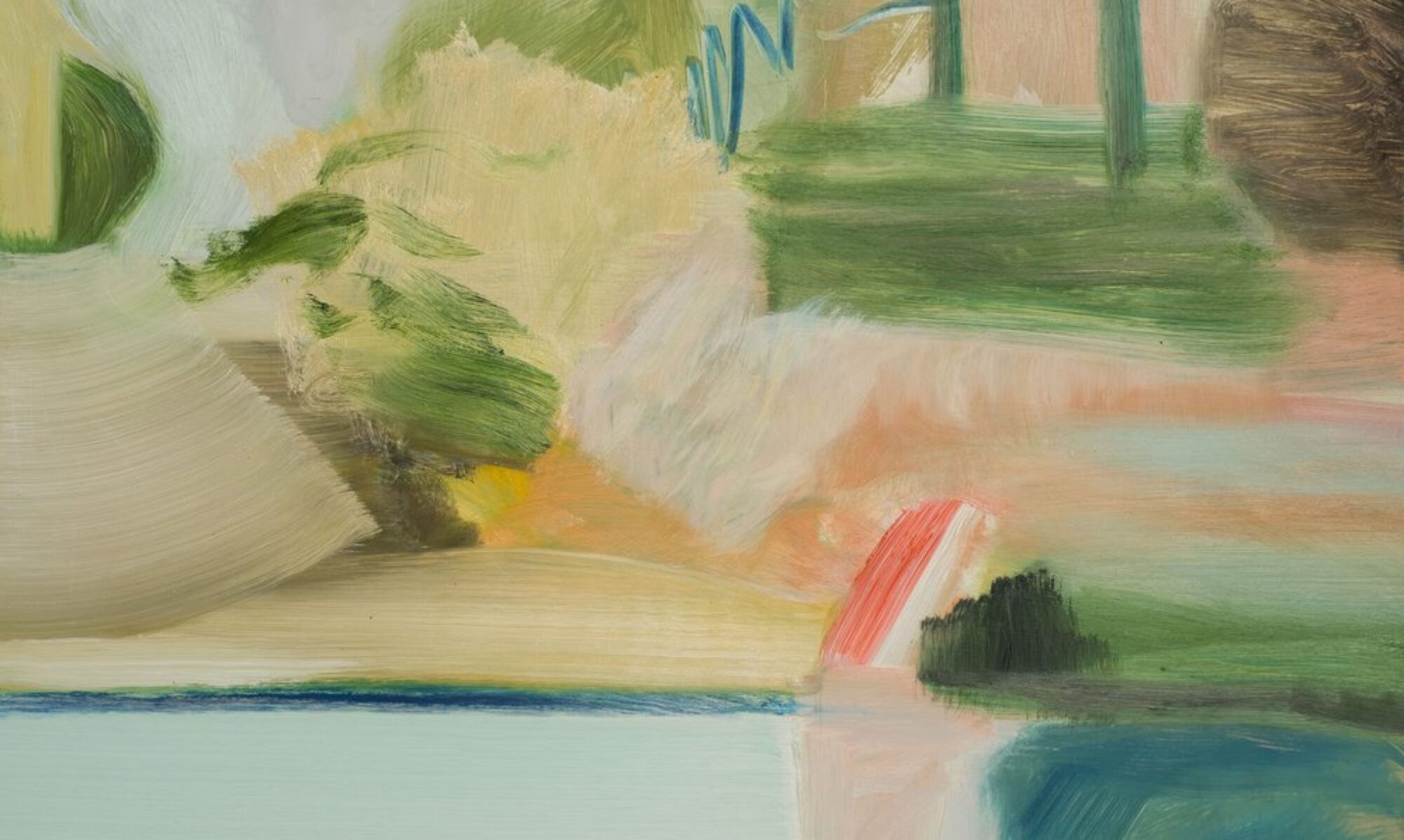

Helen Leaver's painting 'Hedgerow Reverie', oil on linen
Hedgerow Reverie, oil on linen

LB : Ohh, thank you for sharing that very personal story behind your artwork with us. So you mentioned about taking a day to study – to paint for a day – but I think you actually studied at the St Ives School? So I was wondering if you could tell us a bit more about that experience and how it continues to inform your work.

HL : Ohh yeah well that was it. I was like OK, I’m going to do a one-day course. So I did a one-day course and then I did a two-day course and then I thought you know what, I’m going to sign up for a year-long course at The St Ives School of Painting. Again, we went to St Ives on honeymoon –

LB : Another connection, Ok.

HL : Yes, it’s all connected, isn’t it?! Walked past Porthmeor Studios and I even said to my husband: ‘You know, I’m gonna be back here one day.’ So it wasn’t until twenty years later, that I did go.

LB : Like a premonition almost?

HL : I did go back and it was a year-long course. And it was basically three days per month where you go in. There were ten of us all together and we have a different tutor every time, but you have one tutor that takes you through the whole process. So you have one-to-ones with them about anything you want to talk about – talk about your process or where you’re going and it was really useful. The ten of us are still in touch. We all have a WhatsApp group. We meet up –

LB : How wonderful.

HL : And some of us are sort of in the Midlands, but some of us are in Cornwall. So we can – it depends on who’s down – and we actually met up last weekend at the School of Painting.

A photograph of Porthmeor Studios, St Ives School of Painting
Porthmeor Studios, St Ives School of Painting

LB : Ohh cool, excellent.

HL : We hired one of their meeting rooms downstairs and it was great. We went around the table talking about how we’ve been getting on and so yeah, we’ve got a real sort of bond and we’re very supportive of each other and try and go to each other’s exhibitions, things like that.

LB : Oh, amazing. Because this leads me to another question. It sounds like your background was very much a sort of people-orientated style of work. And of course being a painter is a very solitary activity most of the time. So that’s a really nice thing to hear that you still have these connections with other artists and time to discuss your work together.

HL : Yeah, I think it does help, because you’re right, it’s a very solitary pursuit, isn’t it? And doing exhibitions and creating events. I’ve got an opening event next week, I’m going to have so many people there and we all get to chat and connect with each other. I love all that and I love creating artists’ dates. So usually meeting people through Instagram and then trying to arrange to meet up and go and visit an art gallery or see some art or just talk about art, things like that.

LB : Yeah, wouldn’t that be cool if there was like a real club where, you know, that was really a thing to do, you meet, connect and you go and do an activity like looking at paintings or seeing an exhibition, that would be really interesting.

HL : Yeah, I do enjoy doing that. I could do it as a regular thing or whatever, but I just like to be spontaneous. I went to Bristol, to meet up with Sophie at The Square and measure up and get my head around where things are going. I went on the train on my own from Truro and I arrived at Bristol Temple Meads and I got a bit emotional. 

I find bus stations, train stations, they’re liminal spaces, aren’t they? That you can go any direction by them. I love that idea. I find it all quite emotional and I felt like I was coming home. I felt like Bristol’s ‘home’. I’m a bit like this with painting. I have a stream of consciousness and I sort of act on intuition and that’s how I work.

LB : Ohh great. So thinking more about your upcoming exhibition at The Square. Could you tell us a little bit more about some of the ideas and stories behind some of the works? I can see some beautiful pieces behind you. Are these works all connected by a common thread or does each piece emerge from its own starting point?

HL : Yes, and that’s one of my favourite questions because there’s definitely a common thread. So I tend to work in a collection or a series of things. So when I get into a big topic, I’m there and I’m immersed and I produce lots of work from this sort of series. It’s sort of like what happened last year, last Summer. 

Tea Roses in Helen's front garden
Tea Roses in Helen's front garden last Summer

We’ve got some roses in our front garden and we picked the ones that smelled really nice. So we’ve got quite a few really nice rose bushes in our garden. And I saw this beautiful, pinky-yellow rose. It smelled so citrusy, you know – you just want to eat it! And I was like, I wonder if I could paint that sensory experience, of capturing that sort of sweet smell of the petals. 

And with the way I work, I tend to sort of find shapes and forms and lines in nature. So this was a rose and I’m following it with my finger and noticed it was almost like an Infinity symbol. It was sort of like this.

(Demonstrates the curving form on screen, tracing with her finger.)

LB : Mmmm.

HL : When I’m sketching them, I come up with these sorts of shapes and lines and they almost become what I call an embodied memory.

Like my body knows that shape, it knows how to follow that line itself. I don’t really have to think about it, so when I’ve got a paint brush in my hand, they’d sort of do these lines, shapes and then if there’s a lot of repetition in that, usually with lighter colour or something, a bit more transparent.

I like to think that’s sort of how my memory works. You know how you can have an event and then the memory of it might be softer, or a bit faded. And I love playing with that idea of having something happen, like an event. So my wedding day, for instance, and my memories of that. How do I show that in paint form?

These sorts of shapes are then repeated in loops. Because I experience time in these sorts of layers and I love that idea of having this sort of –  you’ve got this cherished moment with family or your husband and then you can somehow go back there.

You can be transported back to that through something jogging your memory. Whether it’s a piece of music or his smell or something that you can transport the concept.

A photograph of Helen's studio
Pink paints in the studio

So this is what all (of) this work is based on. It’s that idea of replaying or re-experiencing those feelings of happiness and joy and the symbolism of the roses and peonies and just my love of pink.

I just want to get the pink out and basically just play with pink because it makes me happy. I noticed one of your questions is about how this collection of work is different to what I call that blue, the blue that was sort of liminal.

LB : Yeah.

HL : That series was called the ‘Liminal Series’ and it was – whether it’s sort of being in St Ives and being at the Porthmeor programme and you’re right there on the beach, or whether I wanted to capture that feeling of watching the waves – wave watching, I’m really interested in in liminal spaces anyway.

Stillness Found Between Two Waves, 30 x 40cm, Oil and earth pigments on board. Courtesy of The Summerhouse Gallery

I really tap into, you know, when you’ve slept and you haven’t even opened your eyes yet, but you sort of think you’re awake, but you’re not dreaming. There’s that little window and I get lots of information in that. I get painting titles, I get compositions, I get colours. I really like to tap into that and when I’m in my studio and I’m in the zone, I’m in the flow and that’s where I paint from.

I’m not a planner. I don’t plan things. I’d get bored if I planned it all out. I don’t have a sketchbook, either. I have pieces of paper taped to my wall to sort of help me bring things together. But I did use to use sketchbooks and they were very encouraged in the Porthmeor programme at St Ives School of Painting. But I find that once they’re in a book, I don’t really look at them again.

LB : Sure.

HL : It’s just my way of working, I guess. I tear the pages out and then I’ll rather stick them on the wall and have them as sort of visual aids – and words – colour palette, that I’d like to focus on.

L B : That makes sense. Do you often make works on paper as well as on canvas?

HL : I don’t usually use paper. I’m loving linen at the moment. I like to work on board and wood because they’re very flat and rigid and you can get stuck in with the paint and I sort of shied away from canvases for a while, but I like the idea of having the linen, the unprimed, natural linen showing through. 

It has its own space really and leaving the canvas untouched was something that I really fought against because I wanted to cover the whole thing and work layers and I was just like: ‘Well, what if? What if I kept some of these spaces untouched? Am I allowed to do that?’ So these spaces that I find in the canvas that have got nothing, no paint on, give a bit of breathing space and the viewer can, has room to, come up with their own – I don’t know if ‘interpretation’ is the word as they’re not really something to figure out or interpret – but just to have space. I really like that idea.

A photograph of a work in progress in Helen's Studio
Floral-inspired works in progress in Helen's Studio

In Japanese culture, there’s a thing called ‘Ma’. In (the way) Japanese gardens are set, you know, there’s space and then there’s one tree or some bushes or something.

LB : Mm.

HL : And then more space, and there’s not really a direct translation between that into English without using like 50 words, but it’s about how space – or nothing, nothing happens – is actually the thing that’s holding everything together. It’s very important and very integral. Have you heard of the Studio Ghibli? You know, films like ‘Spirited Away’ and –

LB : Ohh, yes. Yeah. So –

HL : Animated films. There are moments in those films where you just have a shot of the leaves rustling and there’s no dialogue, there’s no action. It’s all animated and really sort of speaks to me on a soul level. This idea of being present and appreciating what would be sort of small and inactive things, but actually they’re important and really help to appreciate (the) present moment. And that happens when I’m drawing and painting and especially observing flower petals and it really helps to make me happy.

LB : Ohh. Super. I think often those spaces that you’ve mentioned, particularly as you can see that raw linen behind it, does remind me of something like a gap in a flower bed – coming back to the tea roses – or even a forest glade, you know, where the light penetrates, in contrast to the dark dense woodland, for example, or as you mentioned earlier, being in St Ives watching the sea and the spaces and the gaps between each wave, again going back to those liminal spaces. So that’s intriguing. And yes, your mention of Ma because I think previously you’ve said that meditation is very important to you and so I wondered what bearing this has on your paintings?

HL : Well, I’ve been meditating for many, many years as a way to handle periods of anxiety and depression and I find meditation helpful and I’m actually trained in helping people to meditate. I wouldn’t call it a teacher, I’m a facilitator really.

I find when I’m painting or drawing, it’s like meditation. You bring yourself what they call to the present moment and then you come to a point of noticing. So you almost become detached from a feeling or an emotion or a thought. You become the observer of your thoughts or your emotions. Like, you’re the sky and then your emotions and your thoughts are just clouds. So, you aren’t the cloud, you’re just the sky. When you’re in a moment of meditation, you can stop that, you can notice that, and it was a huge sort of eureka moment for me: ‘Oh, so I’m not my thoughts! Oh, I’m the one that notices my thoughts.’ When you’re in a point of noticing, then you can choose your thoughts, or put a break on them, and choose to think a different thought, a nicer thought, or a better thought.

So, yeah, it was very helpful for me to learn meditation, to discover meditation and how it’s almost the same thing as painting. Painting for me is my meditation, and you can tell when I’ve not done painting for a few days because I haven’t had that space and haven’t had that moment to myself of being in that flow state. I treat it all as the same thing, meditation, art, it’s all one thing.  

LB : Yes, visually when you say about the sky and the clouds passing, I see almost your linen canvas is your sky, and these mark makings of the pinks and greens, they are the effectively the clouds passing through the canvas, or along the canvas. Passing by. Although obviously they’re making their presence known. So, visually, it’s a really interesting way to connect it to the physical structure of your paintings.

HL : Yeah, yeah. Oh, great. 


a photograph of Helen Leaver's painting 'A Softness Came From The Starlight and Filled Me Full To The Bone' in a simple wood frame
A Softness Came From The Starlight and Filled Me Full To The Bone, Oil on linen

LB : Sometimes the titles of your work don’t make themselves known straight away, or for a while. And I think I saw on Instagram you posted a painting and that was inspired by WB Yeats’s poem the ‘Wanderings of Osin’. And the quote ‘and softness came from the starlight and filled me full to the bone’ sort of lent itself to the title of that particular painting. Could you tell us a little bit more about this piece and how it connects to your choice of title?

HL : Oh, I think I said earlier that sometimes these titles don’t come straight away but sometimes when I’m in that liminal space of awake and dreaming, I have these sorts of ideas and jot things down, but sometimes when I read poetry, lines just jump out, and I think: ‘Oh, yeah, that describes how I feel about this particular painting’.

That’s just what happened with the Yeats’ poem. I did Yeats at A-Level. His love of nature, being in nature, well, it fills him to the bone, it means it’s part of him. I love the words ‘softness of starlight’ as well.

LB : I find that fascinating. It’s almost like another breadcrumb that you studied all those years ago for the A-Levels and only now is it sort of coming to fruition.

HL : It’s like layers of time, isn’t it? I don’t really understand time. It blows my mind. I can’t comprehend it. Rather than it being a linear thing for me, I see that it has layers, and everything (is) sort of connected, and I can access my past, at any point, either from a point of meditation, or as I’m painting. I think you can, everything’s connected.

LB : Absolutely, I think that’s almost again in the structure of your work. You have those very early washes at the back. They’re still visible. Even though they happened before the mark making that’s more in the foreground, or in the latest layers. Would you say that there’s a strong link between your work and poetry?

HL : Oh, definitely. Aren’t they visual poems? Are they poems in physical form, maybe? The way that I read poetry, you look at repetition, you look at alliteration, you look at structure or punctuation, things like this, and it feels like that when I’m looking at my paintings. I’m looking at what’s repeating, what are the layers, what’s the themes? And the more that you study a poem, the more you get out of it, don’t you? You sort of pick a line, and then you think about the themes that the poet’s trying to convey, and that I feel like that with my paintings, you know? But yeah, maybe they are a visual poem.

LB : Yeah. I like that. So stemming from Yeats’ epic poem, do you find wider influences from mythology and folklore have any bearing for your practice?

HL : Maybe, maybe, yes. I love the symbolism of flowers.  And to go back to titles of paintings, sometimes if you look up the symbolism of a particular flower, it can come up with things, like peonies. I was reading the other day (that) in Victorian times, they thought wood nymphs would hide amongst the petals.

A photograph of a close up of two peonies in Helen's painting studio.
Peonies in Helen's Studio

LB : Oh, I’ve only ever seen ants – ants hiding between the petals!

HL : Well, maybe there might be a nymph in there, I don’t know! So yeah, it just enriches my art practice, I think. Reading about art, reading about flowers, reading about symbolism, reading poetry, looking at other artists, talking to people who view your art, this is all feeding into the art practice. There’s so much more than just going into an art studio and just painting, isn’t there?

LB : Completely. Absolutely.

HL : It distinguishes, enriches my life. I look forward to going in there (the studio) and then, a couple of times a year, there are these points where I’m exhibiting them. And showing them, that’s really vulnerability, to open yourself up to showing people.

And there’ll be lots of people next week, on May the 7th. I’ve got an opening event. I’ve got my family there, my friends. So you do feel a bit vulnerable, sharing, showing people, this is in my heart, this is what’s in my soul, you know? This is what’s inside trying to make physical, you know?

When I was lying on my bed, not very well, a small part of how I could get better and how to make myself well – a small part of it – was the thought that, okay, I can paint. I want to get what’s in here out there. So that thing that was inside is now outside.

LB : It physically exists in the world.

HL : Yeah. I didn’t want it to stay inside. I wanted it to be out, out here, being seen. A very small step, very gradual. This is a long process of small baby steps, of getting to this exhibition in Bristol, where I’ve got twenty odd paintings on show and everyone’s going to be there. You know, if you said that to me, three years ago, I’d be like: ‘No, no, I’m not gonna do that!’

A photograph of Helen installing her work at The Square Club
Helen installing her work at The Square Club

So, it’s all these little… You know, being at the Poly exhibition in Falmouth, all these little things, all these little stepping stones, that just help with my confidence. Again, it’s sort of growing, it’s snowballing, it’s exciting. That’s how I try and choose where to put my energy next – do I feel excited?

And I don’t know if you do that Linda, where you just, you know, you can be discerning and choose what you want to put your energy into. What makes you go: ‘Yeah!’ You know, that feeling of – ‘oooo’ – you know? I try and follow that feeling. I don’t know how you’re gonna to be able to spell that when it comes to type this out – that feeling of ‘oooo’. Yes. That excitement is where I follow my path.

LB : Yes, it’s very intuitive and almost going with the flow in a way and following the thread to see where it leads.

A photograph of Helen Leaver's painting 'Hedgerow Reverie' installed at The Square Club
Hedgerow Reverie installed at The Square Club

LB : A few last questions. How long have you been working on this series, this group of twenty-two paintings for and how do you know when a painting is finished?

HL : This particular collection – I didn’t put brush to linen until pretty much, I think it was about August last year.

LB : Wow, that was very quick for twenty-two paintings in… like, eight, nine months? That’s impressive!

Before that I had all these sorts of ideas marinading in my subconscious. And then it became conscious. But I didn’t physically start painting until late summer.

And then, how do I know it’s finished? Oh, that’s such a good question. Usually when I feel like I don’t have to do anything else to it. You just know. It’s really hard to explain to somebody. I mean, you know, you’re an artist Linda. You know when it’s finished, but having to try to explain that to people is really hard. You can go all sort of: ‘Well, it stops asking questions’. I’ve heard someone say that’s really important and it resonates actually. That it just stops wanting something, it stops questioning. Sometimes it’s almost like a ceremonially type thing: ‘This is the last dot. Right, it’s done.’ So sometimes that happens. Or, usually, it’s just: ‘Oh, one more layer. It needs one more layer.’

But interestingly, it’s not about adding – what can I take away? That’s really interesting: ‘So this doesn’t need anything extra, but what can I remove?’ I’m there with the solvent and trying to get something back and then I’m like: ‘Ah, that’s it, that just needed that.’  There isn’t really a hard definitive answer I can give you.

A photograph of a painting by Helen installed in The Square Club's Reception area
One of Helen's paintings graces the wall in The Square Club's light-filled reception

LB : No, it’s interesting, because I also heard there comes a point where sometimes the paintings – and sometimes I find this too – the paintings kind of paint themselves. They sort of tell you what they need. They say: ‘I need some yellow here’ or ‘This has to be bolder’ or ‘This has to be pushed away or pushed back’. I think, yeah, there comes a point where, finally, it works and it sort of says: ‘I’m saying what I need to say now’. Also, when looking at some of these paintings, these gorgeous pieces behind you, I’m reminded of the immersive quality of Monet’s waterlilies, and I know that may or may not have been consciously intentional. We mentioned Rothko a bit earlier, I was wondering if there’s any other artists that have influenced these paintings?

HL : Not artist, but going back to the Miyazaki Studio Ghibli films, I’m very much influenced by those feelings of Ma and space, and then poetry, obviously, with T.S. Elliott, maybe, or Yates. But painting wise, I don’t know if I have any influences, other than, sort of, Rothko, in that his massive (paintings) felt immersive, and that was quite an influence on me when I saw them a couple of years ago – just to have that art as an experience. Oh, I was going to say, going back to sort of the literary thing, because I studied English at Uni, I didn’t do Art at Uni. One of the novels that I remember vividly was James Joyce’s ‘Ulysses’, which was just mind blowing –

LB : (Laughing)

HL : So I really liked that idea of that sort of stream of consciousness. Yeah, he did that in written form, and I’m doing that in a painting way.

LB : That’s a really nice connection there. The idea of the stream of thoughts, like you’re observing the flowers and it’s your thoughts about the flowers, what the flowers smell (like) and how they look, and all that comes onto the canvas.

A photograph of Helen dressed in blue installing her paintings at The Square Club
Installation day at the Square Club

LB : Finally, Helen, what’s next? Your exhibition at The Square Club continues through the Summer season, hopefully with lots of weddings taking place in front of your work. So how do you think all this experience might shape the direction of your practice for the future?

HL : Oh, that’s such a good question.

LB : Yeah, well, it’s a tricky one – get your crystal ball out!

HL : I really would like to carry on with this body of work that I’m doing. So this isn’t the end of this collection, which I’ve called them ‘Romantic Reveries’ as a title. They do have a little bit of a Romantic feel and ‘Reverie’ means daydream, or like a dream. So I’m carrying on. I’m going to order massive rolls of linen and I want to work big.

LB :  Wonderful.

HL : With a view just to paint for me. I want to paint big, bigger than my arms, so I have to sort of get on a stool, get up here.

LB : Super exciting!

HL : And we’ve got a bit of space outside my studio that’s a sort of gravelly area, and I can put a canvas out there and get on the floor and just be free and see what happens from painting something really big.

That would be just for me. As in all my art, I do it for me first, of course. I don’t paint to order. I don’t really do commissions. I just want to be free to just paint what I’m going through, what I’m interpreting and things like that and then offering them to people, and if they love them and buy them – brilliant. I love that they resonated with something that I made sort of spontaneously, and not specific to order.

A photograph of Helen Leaver's abstract painting 'Blushing Blooms' installed on a textured wall at The Square Club
Blushing Blooms, Oil on linen, installed on a feature wall at The Square Club

I’ve got a gallery in Marazion, The Summerhouse Gallery. I’m very privileged that I’m one of their artists. So, continuing to add work to their – to that gallery, and then possibly looking at working with another gallery next year.

LB : Oh, wow. Ok, brilliant.

HL : And then, who knows? You know, the sky’s the limit.

LB : Yeah, this is so exciting to hear that your intention is to scale up your paintings. That’s wonderful. So as it’s on loose canvas, unstretched canvas, you won’t be limited to the size of the stretcher in any way. I really find it intriguing this idea that you could paint outside as well. So that adds another layer, another dimension to the work too – actually physically making them outside. So exciting times, exciting times ahead.

So you’re all set for Thursday? Are these the paintings behind you that are going in (the exhibition)?

HL : These are big ones, these are a metre wide!

LB : Wow! Lovely, yes.

HL : They’re going to be going either side of the mirror where you get married, so bride and groom and then my paintings.

A photograph of two of Helen's paintings installed at The Square Club, either side of a large mirror where weddings take place.
Two of Helen's paintings installed at The Square Club, either side of the wedding mirror

LB : It’s going to be a terrific exhibition. Yeah, it sounds amazing.

HL : Thank you very much, and they do things like wedding fayres.

LB : Oh sure, yeah.

HL : They’re holding a wedding fayre one of the weekends so I should get a lot of new people looking at my work.

LB : That’s fantastic for you, a lot of extra promotion, so that’s really exciting.

HL : So, they’ll be in in situ and nicely done next week, I think.

LB : But really inspiring to talk to you about your work and just to learn more.

HL : Well thank you very much for giving me an opportunity to talk to people on the Internet, and your time.

LB : Oh not at all! So wishing you all the best for Thursday.

HL : Right, I’ll let you go!

LB : Thanks very much, take care! Bye Helen!

A photograph of Helen at her Private View event.
Helen at her private view event at The Square Club

HELEN LEAVER

Originally from Bristol, Helen now lives in Cornwall and paints from her light and tranquil garden studio surrounded by farmland. She embarked on the intensive year-long St. Ives School of Painting ‘Porthmeor Programme 2023’ and has exhibited and sold work in solo and group exhibitions in St. Ives, Falmouth, Newquay and the Royal Cornwall museum. Her work is now in private collections throughout the UK, USA, Germany, Austria, The Netherlands and New Zealand.

Visit Helen’s website and online gallery here. 

Helen’s solo exhibition at The Square Club continues until July 2026. 

THE SQUARE CLUB

Located on Berkeley Square in the heart of Clifton, The Square Club welcomes both members and non-members through its elegant doors. Cocktail bars, a boutique lounge and an award-winning restaurant all await patrons in this refined Georgian setting. 

The perfect venue for chic weddings, private soirees and exclusive events, The Square Club is Bristol’s finest and longest-serving destination for the city’s creatives. 

Several art exhibitions are held each year to showcase the work of regional artists and makers. Find out more about the Gallery at The Square here. 

FOLLOW THE PULL OF PENDOUR

PENDOUR PICKS

The Healing Artworks of the April Sampson Cancer Centre

Lincoln, Nebraska USA

PENDOUR CULTURE

Linda Bell

Museum Moment : The Royal Academy – Rose Wylie

Spot a red elephant running rampage along the gallery walls, paint splattering from every direction across the canvas in their wake. Wink at the paper cut-out girls in red satin, cheekily posing between trees as footballers enjoy a kickabout in the corner of the gallery space, their hairy legs on full show for all to see.

A photograph of Rose Wylie's painting 'Bird, Lemur and Elephant 2016
Bird, Lemur and Elephant, 2016, Oil on Canvas, Private Collection

Rose Wylie’s solo exhibition ‘The Picture Comes First’ is a playful, cheerful and somewhat tongue-in-cheek presentation of this 92 year old’s imaginative practice.

Many pieces in this exhibition have been crafted using collage techniques and thick oil impasto. Text in childlike scrawl offers observations, descriptions, instructions and thoughts, wrapping across the canvases like TV subtitles – a narrator to these compositions of joyful mash-ups. It’s a riotous festival of colour, humour and feeling.  

A photograph of Rose Wylie's painting Red Twink and Ivy, 2002
Red Twink and Ivy, 2002, Oil on Canvas

Drawing inspiration from her experiences of growing up in London during the Blitz, of popular culture and fairytales along with newspaper stories, biblical references and more, we enter a world pulsating with the mischievous energy of a true artist rebel. It’s fascinating to think what Joshua Reynolds would have thought of Wylie’s unanatomical creatures and insects as big as houses!     
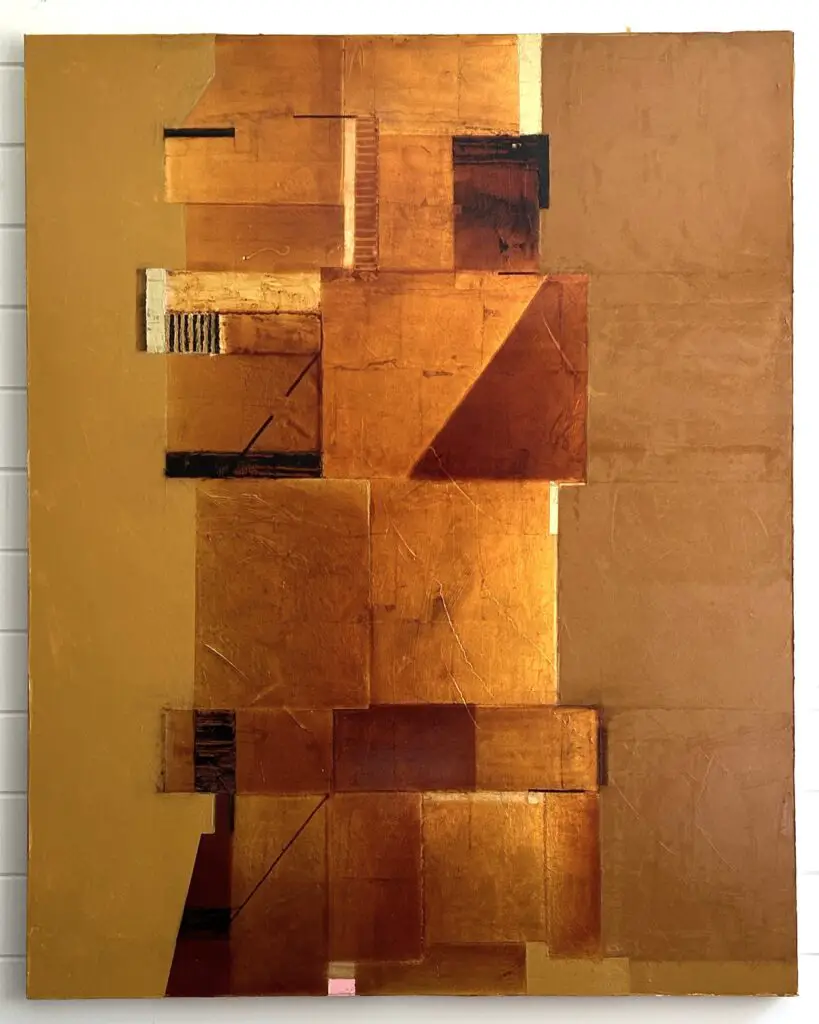
A photogrpah of the Royal Academy with a banner for Rose Wylie's solo exhibition under a blue sky.

MORE MUSEUM MOMENTS

Coming Soon! 

LET'S GET SOCIAL!

PENDOUR PICKS

A photograph of Steve Joy's painting 'Desert Poem (Maroc)'

Architecture of Silence : Exhibition Synopsis for Steve Joy’s Solo Show

LED Architects, New York

PENDOUR CULTURE

Linda Bell 

An image of a yellow cashmere jumper by Sezanne with a bottle of the Clothes Doctor's Delicates Detergent.
Instllation view of Mike Nesbit's Highland At Noon at the April Sampson Centre. A leafy plant joins the artwork as shafts of light filter down from the overhead skylights.
A photograph looking up at the Hawa Mahal in Jaipur

Hawa Mahal, Palace of the Winds

WANDERLUST

Linda Bell

Architecture of Silence : Steve Joy

An image of the invitation card to Steve Joy's exhibition, with a photograph of a painting against a white background. Text invites the audience with details of the address and date.

STEVE JOY - PAINTINGS 2025

The Synopsis ‘Architecture of Silence’ by Linda Bell explains some of the inspirations behind Steve Joy’s exhibition of abstract paintings.

Steve’s exhibition was presented by Lynch Eisinger Design Architects (LED) and Amy Barkow and installed in the Architects’ studio on Grand Street, New York City.

The opening event was held on Friday 7th November 2025 to a contemplative and engaged audience. The artist Steve Joy gave a short speech and Linda Bell’s Exhibition Synopsis was available for audience members to read. 

A few photographs from the Opening Reception.

Coming Soon – A Catalogue of photographs of Steve’s paintings will soon be available to purchase in our online Shop, The Pendour Parlour! Linda Bell’s Exhibition Synopsis will accompany the images. Proceeds from every sale go to the artist and writer – our way of giving back and supporting the makers of culture today. 

A few photographs from the opening event. 

EXHIBITION SYNOPSIS : 'aRCHITECTURE OF SILENCE'

       Hush –

       and hear

       the Architecture

       of Silence:

       a sigh

       that echoes

       across the Ages.

The timeless light of Byzantium gold finds contemporary awakening in Steve Joy’s structured paintings. His luminous, signature glow draws influence from the materiality of Medieval icon paintings – surfaces cracked, timeworn and weathered by the centuries. Joy’s repertoire of golden radiance is gently diffused by layers of varnish and beeswax veiled over abstract geometries. Yet these new works presented here by LED Architects reach beyond Cimabue’s distorted planes of perspective and the flattened forms of Giotto’s arched buildings.

An installation photograph of Steve Joy's exhibition. A red pipe and bookcases create a sort of 'frame' for a painting, which is installed upon a white wall.

Exhibition installation view

This exhibition heralds the fresh direction of newfound influence. Joy’s first New York solo exhibition since the early 2000s leads on from steadfast dedication to a practice split between Long Island, Nebraska and Europe. In these recent paintings Joy merges the appeal of ambitious American Abstraction with traces of ancient architecture. Angles, lines and structural forms fuse with poetic references, ideas borrowed from film and the artist’s own travels.

A photograph of Steve Joy's painting 'Desert Poem (Maroc)'

Desert Poem (Maroc)

2022 – 2025 Mixed Media on Canvas, 152.5 x 122 cm, 60 x 48 Inches

A voice cries out in the desert, revealing the silence of the sand. Joy’s painting ‘Desert Poem (Maroc)’ is sung in harmonies of iridescent, regal red tones. Evoking the loneliness and majesty of the expansive Algerian desert, this work is inspired by the artist’s own journey by camel near the Moroccan border. In another painting, thin transparent layers of blue recall the sea and sky viewed through the ‘whoosh’ of an open window in Nice. Stripes and luminous washes of varnish allude to Matisse’s Mediterranean interiors and the sea-salt scent of the waves.

A photograph of Steve Joy's mixed media painting 'A Window In Nice'.

A Window In Nice

2025, Mixed Media on Canvas, 152.5 x 122 cm, 60 x 48 Inches

In contrast, the shimmering, silver hues of ‘Queen’s Mirror’ suggest a cooler, almost industrial presence. This work is inspired by an ornate, royal mirror Joy encountered whilst retracing the steps of Lord Byron in Sintra, Portugal. Silver leaf, ink and oil imply the image of a faded reflection. The tarnish of Time. A vacuum of vanity to rival Sylvia Plath’s poem. Memory and materiality become one. Instability reigns. 

An image of 'The Queen's Mirror', a silver painting by Steve Joy

The Queen’s Mirror

2021 – 2025, Mixed Media on Canvas, 122 x 91.5 cm, 48 x 36 Inches 

An image of Steve Joy's painting 'Architecture of Silence (Foundation)'

Architecture of Silence (Foundation)

2025, Mixed Media on Canvas, 91.5 x 61 cm, 36 x 24 Inches 

Several paintings in this exhibition are formed around a cross-shape structure. Joy’s recurring motif is inspired by the subterranean churches of Lalibela in Ethiopia. Carved deep into the earth during the twelfth and thirteenth centuries, these hand-hewn sanctuaries are architectural hymns in stone. Shrouded in mystery, they are believed by some to be the handiwork of King Lalibela built with the help of Angels from on high.

An image of Steve Joy's mixed media painting 'Architecture of Silence (Gravity)

Architecture of Silence (Gravity)

2022 – 25, Mixed Media on Canvas, 152.5 x 122 cm,  60 x 48 Inches 

In ‘Architecture of Silence (Gravity)’ a golden form resembling a Doric column appears tethered by delicate lines of ink – like the giant bound to the earth in ‘Gulliver’s Tales’. Influenced by sci-fi films such as ‘Interstellar’ and ‘Gravity’, Joy’s floating form hovers as though a floating structure of light. Weightless yet constrained, variations in the gold leaf suggest movement, as though the imprint of sunlight streaming in through an unseen window.

Joy also draws inspiration from Medieval Cistercian Abbeys dotted throughout France, such as Sénanque. Resplendent in their plain, restrained ornamentation, the minimal aesthetic of these architectural wonders holds profound stillness. Echoes of their floor plans appear in Joy’s compositions, evoking the deep sense of contemplation still present in these buildings. Joy’s palette and choice of materials recall the balance of sunlight and shadow around the cloisters which once guided the monks’ introspective transformation in their oath of silence.

An image of Steve Joy's painting 'Icon Byzantium Lionheart'

Icon Byzantium Lionheart

2023 – 25, Mixed Media on Canvas, 152.5 x 122 cm, 60 x 48 Inches

While ‘Icon Lionheart’ references Fontevraud Abbey, resting place of Richard the Lionheart, the silent stones of Mayan temples re-emerge in the diptych ‘Architecture of Silence (The Mayan)’. Here, Joy engages with the remains of an ancient civilisation lost to the jungle following his frequent visits to Mexico. This work resonates with the haunting painting ‘Ozymandias’ inspired by Shelley’s poem where a ‘colossal wreck, boundless and bare’ lies on the ‘lone and level sands’ beneath a vast sky in an ‘antique land’.

A photograph of Steve Joy's mixed media painting, diptych split into two canvases. The painting on the left is titled 'Architecture of Silence (The Mayan)' and on the right side, 'The Mayan II (Moongold)'.

Architecture of Silence (The Mayan) & The Mayan (Moongold)

Diptych, 2024 – 5, Mixed Media on Two Canvas Panels, each 122 x 91.5 cm, 4 x 3 ft

If a civilisation falls, who is left to hear its crash? The collapse of its architecture? 

Shadow lines of history are cast upon canvas as meditations on light, time, memory and the sacred geometry of silence.

A photograph of Steve Joy's gold themed painting 'Ozymadias' against a white wall.

Ozymadias

2025, Mixed Media on Canvas, 152.5 x 122 cm, 60 x 48 Inches

With thanks to Lynch Eisinger Design Architects and Amy Barkow

Follow Linda Bell on Instagram @lindabell_linda

Steve Joy’s website : www.stevejoystudio.com

Steve Joy on Instagram

LED’s website : led-nyc.com

VISIT THE EXHIBITION

‘Steve Joy : Paintings 2025’ is open Monday to Friday, 9 am – 5 pm by appointment only. 

Please contact LED architects directly to arrange your visit.

address :  Lynch Eisinger Design Architects, 319 Grand Street, 2nd Floor, New York, New York, 10002. 

email : st****@*****YC.com

tel : +1 212-219-6377

The exhibition continues until April 2026 and another Reception event is due to be held in the Spring, date to be confirmed. 

PENDOUR PICKS

‘ATCG – Artistry, Time, Colour & Gold’

‘S E A S O N S’  Exhibition at Maple Street Construct, Omaha 

PENDOUR CULTURE

Linda Bell 

Zamas Hotel Review : Where to Stay In Tulum, Mexico

PENDOUR PERFECTION * * * * *

WANDERLUST

Linda Bell